


NoomiClone
4.479.00 Reviews
App Specs
- Version
- 2.3.2
- Updated On
- License
- Free
- Downloads
- 5,000,000+
- Developer
- NoomiClone Dev
- Categories
- Simulation
- Platform
- Android
Screenshots
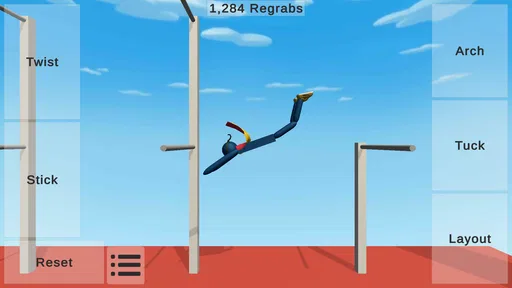
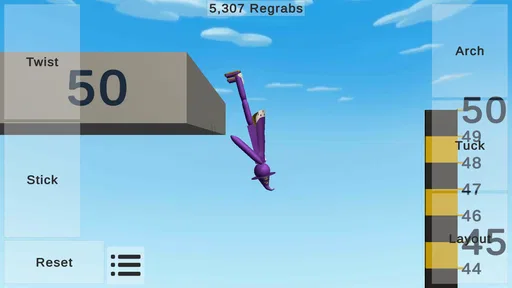
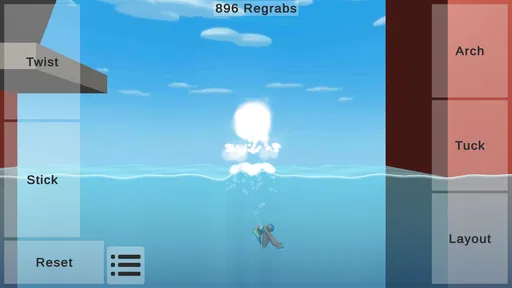
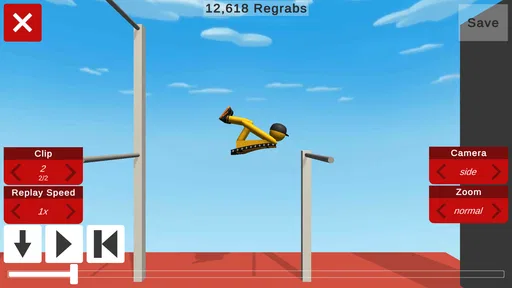
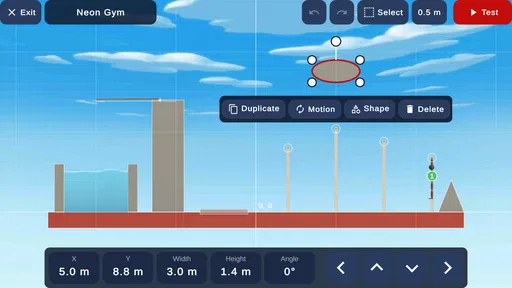
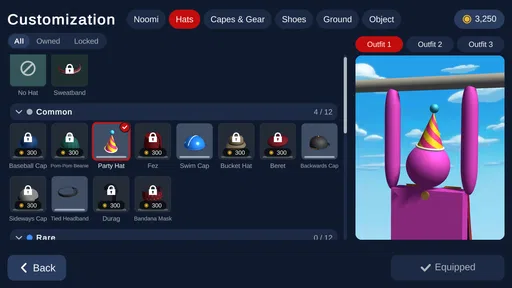
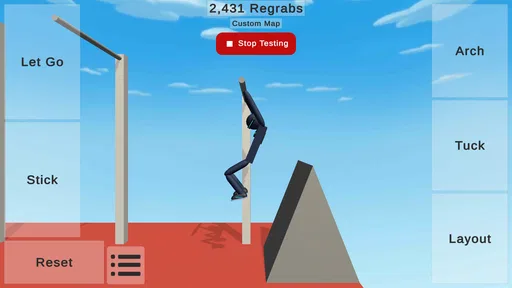
 Analysis by AppCompare
I like simulation games that let me experiment without making every session feel like a test, and NoomiClone’s ragdoll movement gives that idea a playful twist. Instead of aiming for realistic athletic coaching, it turns gymnastic-bar tricks, calisthenics and parkour-style combinations into physics-driven play. The appeal is in trying a move, seeing how the character reacts, then adjusting your next attempt. That makes it easy to pick up for a short break, though it won’t suit everyone looking for a structured sports simulator.
Choosing a goal before you start
One small habit makes this kind of open-ended game easier to enjoy: decide what would count as a satisfying attempt before you begin. I might want to make a transition look smoother, see whether a movement can lead into a second one, or simply find an amusing way for the character to lose balance. The point is not to impose a strict scorecard on the game, but to give a few minutes of play a shape. Without that little intention, repeated experiments can blur together.
This also helps answer a practical question: is it enjoyable if I only have a few minutes? For me, yes, as long as I treat a short visit as a chance to test one idea rather than expecting a complete session arc. I can stop after a handful of attempts because the immediate activity is the attraction. Someone who likes to make progress only when a game records a finished objective may find that stopping point less satisfying.
Learning the feel of each attempt
I find that each attempt is more useful when I pay attention to one part of the movement rather than judging the whole result at once. A loose landing, for example, can prompt me to rethink the setup before I add another action, keeping experimentation purposeful without turning play into a strict routine. That way of reading the physics also sets up a closer look at how small goals shape the opening sessions.
Small goals make the opening inviting
My first useful goal in NoomiClone was simply to understand how a movement could become a convincing sequence rather than a tumble. The ragdoll physics make that learning process part of the entertainment: a near-success can be funny, and a clumsy landing gives me a reason to try a different approach. The game’s focus on bar tricks and bodyweight-style movement gives experiments a clear theme, even when I’m not chasing a particular result.
This is a good fit for players who enjoy improvising. I can treat a session as a little movement puzzle: work out how to get from one action into another, then see whether the resulting combination holds together. That kind of self-set objective matters because a physics game can feel aimless if the player expects a long sequence of explicit missions. Here, I get more out of paying attention to what each attempt teaches me than expecting a tightly guided campaign.
For a new player, I’d recommend resisting the urge to judge the game by the first awkward fall. Ragdoll movement naturally makes control feel less like steering a precise athlete and more like managing a body in motion. I found it more satisfying to make one deliberate change at a time and notice its effect. If I change too many things between attempts, it becomes hard to tell whether the result came from a better idea or just a different bit of physics-driven chaos.
Worth Reading Before You Choose

Flipboard Shows What News Apps Must Do Beyond the Feed

Switching to Android Auto Means Rethinking Your Driving Routine

Google Calendar Makes a Crowded Week Easier to Manage

Ludo King Makes the Most of the Minutes Between Plans

Baby Panda World Brings Quick Play to Modern Phones, but Its Game Library Feels Busy

ESPN’s Live Game View Makes Following Close Games Easier
How I turn experimentation into a routine
A practical way to play is to give each short session one simple aim: explore bar movement, try to make a cleaner transition, or build a sequence that feels more intentional. This keeps the open-ended nature from becoming repetitive. I also find it useful to think of a failed attempt as feedback about timing and momentum, not as wasted progress. Even without a formal training plan, that mindset makes the game feel more like an ongoing experiment than a string of random crashes.
That approach works especially well in everyday gaps. If I have a few minutes before heading out or while taking a break, I can make a handful of attempts and stop without needing to remember a complex storyline. NoomiClone’s central appeal is immediate physical play, so it’s a more natural choice for brief bursts than for someone who wants a deep, narrative-heavy game to settle into for an evening.
A realistic example is waiting for a friend who is running late. I’d open the game with one modest target—perhaps making a movement flow into another instead of trying to create an elaborate routine immediately. If the first attempts are messy, I can narrow the experiment to the opening action and pay attention to how momentum affects the next one. That turns idle waiting into a small, contained challenge; it also gives me a natural reason to stop when my friend arrives, rather than leaving a long mission unfinished.
What counts as progress
The most satisfying progress is the kind I can see in my own decisions: a movement that used to feel accidental begins to look deliberate, or I learn to set up a more interesting combination. That personal improvement is a strong match for a physics sandbox, but it is also a limitation. Players who need a prominent checklist, a steady stream of unlock announcements, or a clearly signposted finish line may not find enough external direction to keep them motivated.
I’d separate two kinds of progress when deciding whether the game is for you. There is skill progress, where I get better at anticipating how the character will move, and there is reward progress, which depends on what the game itself presents. The first is easy to appreciate through repeated play; the second should not be assumed to work like a conventional career mode. If your enjoyment depends on collecting a long list of rewards, a more structured sports or stunt game may be a safer choice.
For players who do enjoy inventing their own targets, the freedom is a strength rather than a gap. I can value a session because I found a more interesting way to connect movements, even if I have not crossed off a formal objective. That also makes the game easier to revisit casually: I don’t need to recall a plot or rebuild a complicated plan before I can enjoy another attempt.
One useful way to notice improvement is to compare the intention behind two attempts, not just their final poses. If I was trying to make a transition more controlled, I can ask whether I changed the setup or whether I merely got a different-looking fall. That distinction keeps the learning process honest. It also stops me from chasing spectacle every time: a simpler sequence that behaves more predictably can be a better personal milestone than a wild result I cannot reproduce.
Challenge comes from control, not just spectacle
The difficulty I notice is tied to the unpredictability of ragdoll movement. A trick that looks simple in concept may take experimentation to make it feel controlled, while an awkward result can still be entertaining. This gives the game a more relaxed form of challenge than a strict score-attack experience, but it also means that patience matters. Anyone who dislikes repeating attempts or seeing imperfect outcomes may find the physics more frustrating than funny.
When I get stuck, I try to simplify the sequence rather than immediately aiming for the flashiest combination. A shorter movement is easier to read, and it gives me a better sense of what caused a loss of control. Once the basic action feels understandable, adding another element becomes a more meaningful test. This is a useful trade-off: restraint can make progress feel slower, but it gives each improvement a clearer cause.
The game’s themes also make it easy to bring expectations from real gymnastics or parkour, but I wouldn’t use it as a substitute for either. Its focus is playful simulation, not instruction. If what you want is reliable guidance for real-world technique, a coaching resource is more appropriate; if you want to tinker with exaggerated movement and physics, this is closer to the mark.
It is also worth deciding what kind of failure you find funny. In a tightly controlled platform game, a missed jump may feel like a simple mistake to correct. Here, the body’s reaction is part of the result, so an unsuccessful attempt can still have entertainment value—but that does not mean every player will enjoy repeating it. If you tend to get impatient when a character behaves unpredictably, a conventional obstacle course with clear routes and fixed jumps will probably feel fairer.
Who will enjoy the pacing—and who may not
NoomiClone works best for someone who is happy to set a small challenge, experiment, and decide when they have had enough. I can imagine opening it during a short commute wait or a quiet moment at home, trying a few different movement ideas, then leaving before the repetition wears thin. The compact, self-directed loop is convenient, but a player who wants constant new objectives may reach a point where personal experimentation no longer feels like enough.
Compared with typical sports simulations, it puts less emphasis on reproducing a full match, season or realistic training routine. Compared with obstacle-course games, its distinctive draw is the loose, physics-based body movement rather than simply racing through a fixed route. Those differences make it a niche pick: I’d choose it for playful stunts and unexpected outcomes, not for tactical competition, realistic athletic practice, or a carefully paced story.
That distinction also helps set expectations about challenge. A conventional score-driven game can tell me exactly whether I beat a target; here, some of the satisfaction comes from deciding that a movement looked better or felt more controlled. That is rewarding for an exploratory player, but it can feel vague if I want the game to judge every attempt for me. I’d skip it if visible milestones are the main reason I keep playing other games.
For a player choosing between this and a more structured stunt title, I’d ask what keeps them coming back. If the answer is replaying a course to shave down mistakes or beating a clearly displayed target, the more directed option is likely a better fit. If the fun comes from seeing how a body reacts when movements connect in unexpected ways, this game’s looser approach has a stronger appeal. It is less a matter of which style is objectively better and more a question of whether you want the game to set the challenge or prefer to invent it yourself.
I’d also be cautious about recommending it to someone looking for a long evening game with a steady stream of new content. Its natural use case is a quick experiment, a few attempts at a chosen idea, or a casual return when the mood strikes. That can be a genuine advantage for people who do not want another demanding commitment, but it is not the same as a progression-heavy game designed to keep directing the player through extended sessions.
Long-term motivation and spending
The main retention pressure is the urge to see whether the next attempt can be cleaner or more surprising. That is a gentle kind of motivation, not necessarily a substitute for a progression system with carefully staged goals. I prefer it when I want low-pressure experimentation; I prefer a more guided alternative when I’m looking for a clear reason to return every day.
The game is free to start, with optional in-app purchases priced from $1.99 to $26.99 per item. I’d approach those purchases as optional rather than as a reason to expect a particular progression route. Before spending, I’d first decide whether the core movement loop is already holding my attention. If it is not, buying something is unlikely to fix the underlying mismatch between an open-ended physics game and a player who wants a strong sequence of goals.
For practical context, NoomiClone is a simulation game from NoomiClone Dev. It has a 4.4 average from around 16,000 ratings and has passed 1 million installs. It is free to download, rated for Everyone, and its current version is 2.3.2; the game was released on December 9, 2020, and requires Android 8.0 or later. Those details make it easy to judge basic fit, but the more important question is whether you enjoy shaping your own challenges.
A sensible spending decision is to play long enough to learn whether the basic physical play itself is appealing before considering an optional purchase. That is especially important here because the core draw is how attempts feel, not a promise that payment will create a more satisfying goal structure. If I already enjoy experimenting, I can decide whether an item seems worthwhile on its own terms; if I am bored because I need clearer milestones, spending would not address that preference.
My progression verdict
I’d recommend NoomiClone to players who like physical comedy, ragdoll movement and the satisfaction of turning a messy first attempt into a more deliberate trick sequence. Its strongest progression is personal: I learn how to approach the movement and start making better use of the game’s gymnastics-bar, calisthenics and parkour ideas. It is particularly suitable for short, low-commitment sessions where experimentation itself is the reward.
I would choose something else if I needed detailed coaching, realistic sports rules, a strong narrative, or a clearly measured ladder of objectives. Those are not small preferences; they change what makes a game satisfying. NoomiClone’s loose pacing can feel refreshing when I’m in the mood to try things, but less compelling when I want the game to direct every step and mark each achievement.
My overall take is that the game earns its place as a casual physics playground, not as a comprehensive athletics simulator. Start with modest movement goals, change one thing at a time, and let a funny failure teach you something rather than treating it as a setback. If that sounds enjoyable, NoomiClone is worth a try; if you need constant unlocks and explicit milestones to stay engaged, its self-directed pace may not hold your interest for long.
Pros
- Quickly creates a digital clone from a short recording.
- Can be useful for producing personalized video messages.
- Simple concept makes it approachable for first-time users.
- Offers a convenient way to reuse your likeness in new content.
- May save time compared with recording every message yourself.
Cons
- Clone quality may vary with lighting
- audio
- and recording conditions.
- Uploading face or voice data raises privacy considerations.
- Some features or usage may require a paid plan.
- Generated videos can feel less natural than live recordings.
- Avoid using another person's likeness without their permission.
FAQs for NoomiClone
What is NoomiClone, and what does it do?
NoomiClone is the name of an app, but without verified details about its publisher, features, or purpose, it is not possible to describe its functions reliably. Before downloading, check the app’s official store listing for a clear description, screenshots, developer information, and recent updates. Be cautious of third-party pages that make claims the official listing does not support.
Is NoomiClone available for Android and iOS?
Availability can vary by region, device, and operating-system version, and there may be similarly named apps or unofficial downloads. Search for NoomiClone directly in Google Play or the Apple App Store and confirm that the publisher matches the expected developer. Avoid installing files from unfamiliar websites, particularly if the official listing does not provide or link to them.
Is NoomiClone safe to download and use?
No app can be confirmed safe based on its name alone. Review the developer’s identity, store permissions, privacy information, update history, and user feedback before installing NoomiClone. Pay attention to requests that seem unrelated to the app’s stated purpose, and do not provide passwords, payment details, or sensitive personal information unless you can verify why it is needed and how it will be protected.
Does NoomiClone cost money, or does it include ads or in-app purchases?
Pricing and monetization details depend on the specific NoomiClone listing and may change over time. Check the app-store page for its price, in-app purchase labels, subscription terms, and advertising disclosures before downloading. If the app offers a trial or recurring subscription, read the renewal price and cancellation instructions carefully so you understand when charges may apply.
What should I check if NoomiClone will not install or run?
First verify that you have selected the correct app and that your device meets the operating-system and hardware requirements shown in its official listing. Make sure there is enough storage, update your device, and try a normal restart if installation fails. If problems continue, consult the developer’s support details on the store page rather than downloading a replacement from an unverified source.


